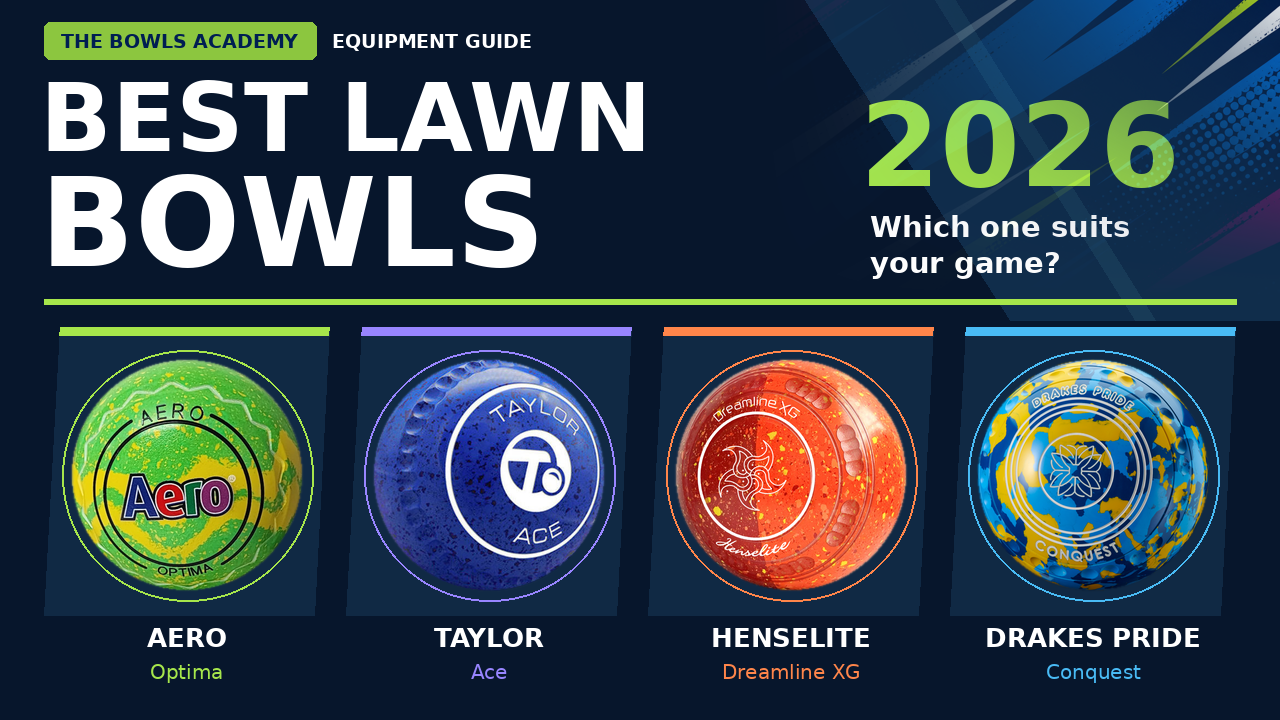
Best Lawn Bowls in 2026: Aero, Henselite, Taylor & Drakes Pride Compared
An independent coaching guide to popular models, draw characteristics, regional playing conditions and choosing a bowl that suits your game.
THE ROLL UP – INTRO
Choosing a new set of lawn bowls can be surprisingly difficult. Walk into almost any bowling club and you'll hear opinions about which manufacturer makes the best bowls. Some players swear by Aero, others have used Henselite for years, while Taylor and Drakes Pride have equally loyal supporters around the world.
But are we choosing bowls because of their reputation, or because their characteristics actually suit our game?
Different models offer different arcs, finishing characteristics and intended playing conditions. Two models from the same manufacturer can behave quite differently, while competing brands may offer options with broadly similar characteristics.
In our earlier article, Which Bowls Are Best? How to Choose the Right Bowls for Your Game, we explored size, grip, bias and what to consider before buying. This guide goes a step further by looking at actual makes and models, particularly the differences between Australian/New Zealand and international markets.
This isn't a ranking of manufacturers. The goal is to help you build a shortlist, understand what you're comparing and test your options properly.
1. UNDERSTANDING BIAS BEFORE COMPARING MODELS
Not all bowls described as having a similar bias will take exactly the same line. It's not simply how far sideways the bowl moves; when and how that movement develops also matters.
Narrow drawing bowls
Narrower models generally require less green under comparable conditions. They may be useful on quick outdoor greens or indoor carpets, but can offer fewer options when the jack is covered by short bowls. A narrow bowl isn't automatically easier to play well.
Medium drawing bowls
These aim to balance a manageable draw with enough movement to access different areas of the head. They are often worth considering if you play at multiple clubs, although one manufacturer's medium model should not be assumed identical to another's.
Wider drawing bowls
A wider drawing line can help get to the jack around short bowls, especially on slower greens. But it can demand greater skill on very fast surfaces.
2. AUSTRALIA AND NEW ZEALAND: MODELS TO INVESTIGATE
Australian and New Zealand bowlers encounter everything from heavier grass to fast grass and synthetic surfaces. That means selecting a model for your most common conditions is more useful than following the preference of an elite player on a completely different green.
Aero Bowls
| Model | General characteristics | Worth investigating for |
|---|---|---|
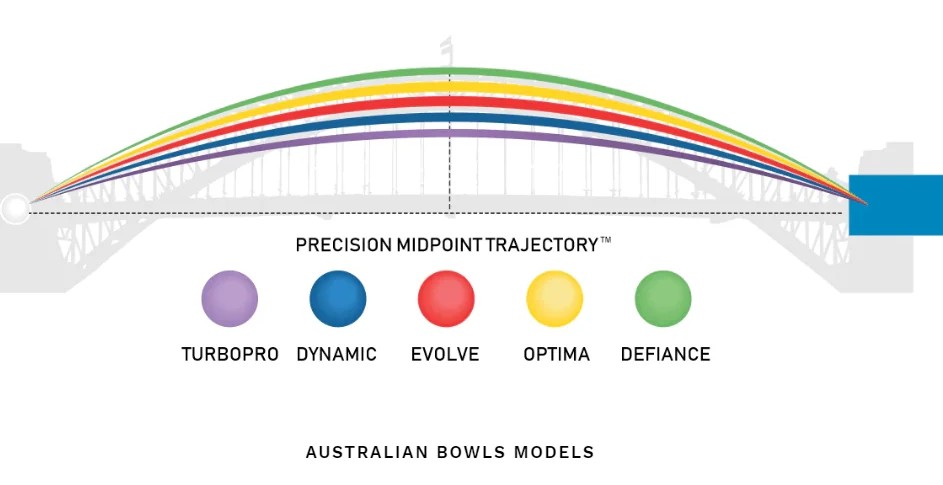
| Optima | Versatile draw; fuller than some tighter Aero options | Medium to faster outdoor conditions |
| Evolve | Tighter line than Optima | Faster grass and suitable synthetic greens |
| Dynamic | Tight drawing line | Very fast surfaces |
| Defiance | Option promoted for slower conditions | Heavier grass or slower surfaces |
| Turbo Pro | Very tight, specialised option | Consistently very fast conditions |
Aero's model recommendations distinguish between green speeds and types of surface. These are useful starting points, but a model recommended for fast greens still needs to pass the test of playing around short bowls and executing weighted shots.
Henselite Bowls
| Model | General characteristics | Worth investigating for |
|---|---|---|
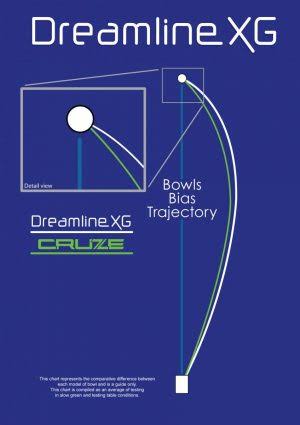
| Dreamline XG | Versatile all-round model | Varied Australian/NZ conditions |
| Cruze | Narrower drawing option than Dreamline XG | Faster greens |
| Tiger II | Gentle, predictable draw and holding finish | Heavier surfaces |
The Dreamline XG is described by Henselite as a major seller in Australia and New Zealand, making it an obvious model to include in a shortlist for varied conditions. Cruze deserves consideration when faster greens dominate your calendar; Tiger II is worth investigating where a fuller line is useful.
Drakes Pride: Australian range
| Model | General characteristics | Worth investigating for |
|---|---|---|
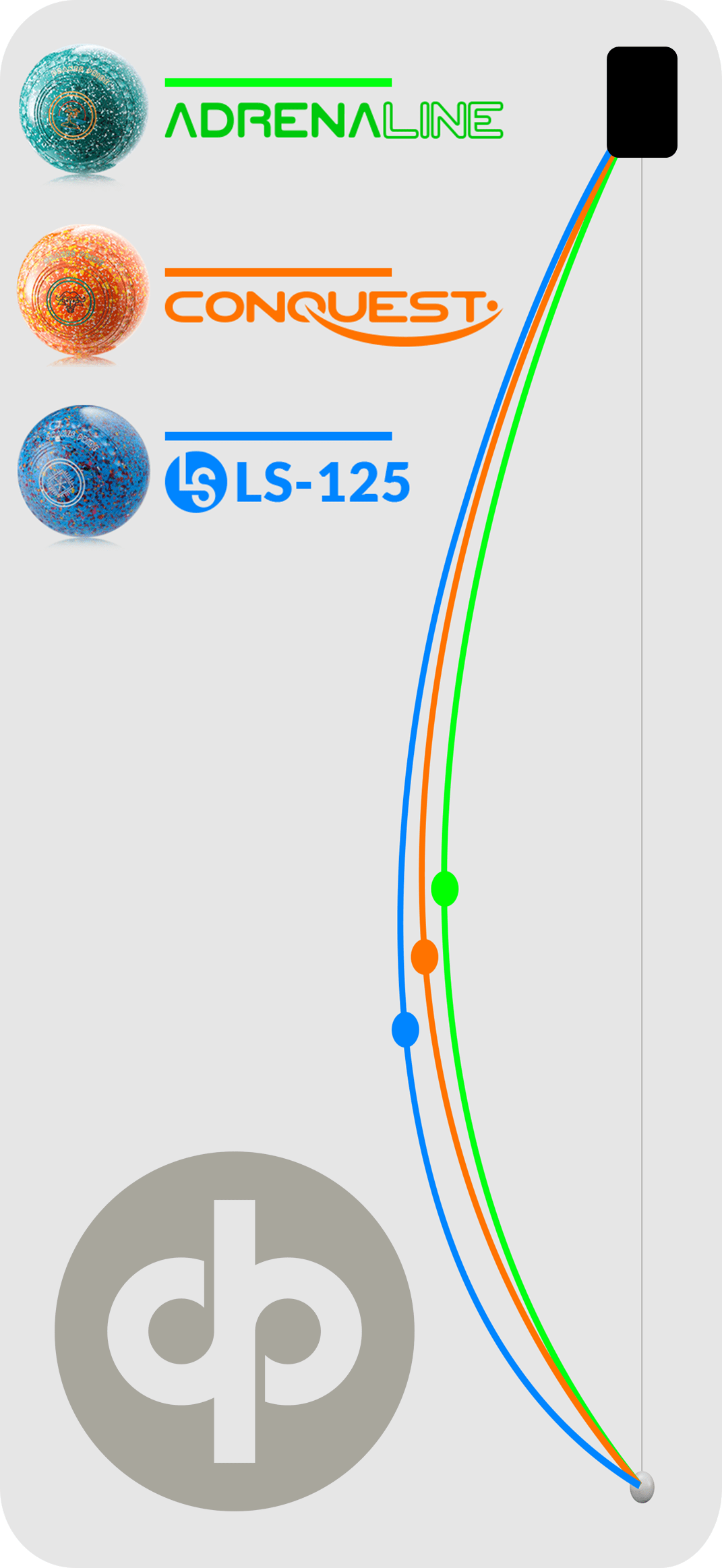
| Conquest | Medium bias | Varied grass and synthetic conditions |
| Adrenaline | Narrower Australian option | Faster greens |
| LS-125 | Medium-to-fuller draw | Slow to medium conditions |
These three models illustrate why comparing within a manufacturer's range is useful. A player looking for a tighter line may approach the shortlist differently from someone who needs more bias on a heavier grass green.
3. INTERNATIONAL BOWLERS: UK, EUROPE, SOUTH AFRICA AND NORTH AMERICA
Manufacturers do not necessarily promote the same ranges in every market. Slower natural grass, indoor carpet, artificial surfaces and local playing traditions all influence what models are commonly considered. This is why importing an Australian recommendation without considering the green can be misleading.
Taylor Bowls
| Model | Published drawing description | Potential application |
|---|---|---|
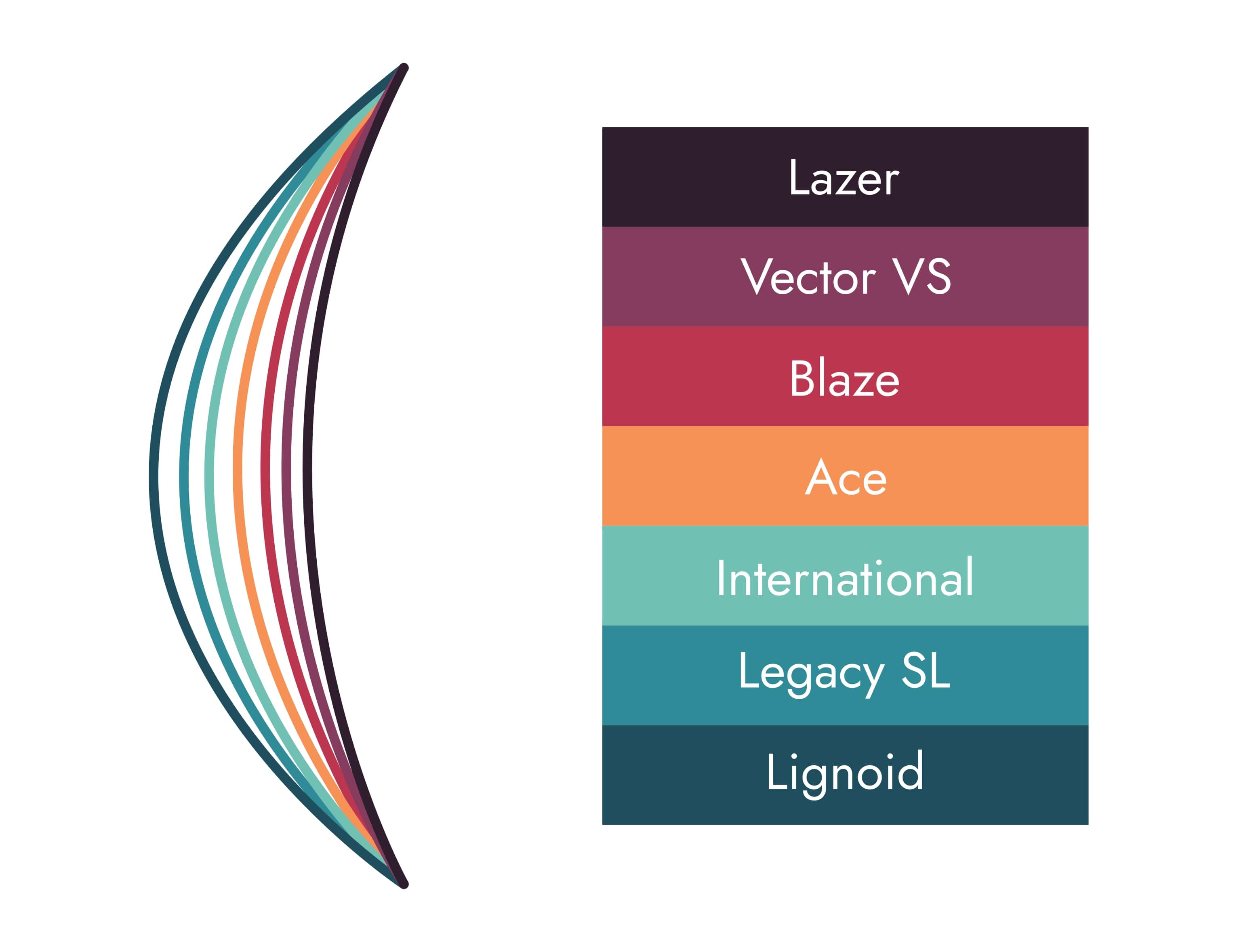
| Vector VS | Narrow arc | Selected indoor and artificial surfaces |
| Blaze | Between Vector VS and Ace | Indoor/outdoor versatility |
| Ace | Medium arc, smooth finish | Varied indoor and outdoor greens |
| International | Similar to Ace with stronger finish | Players seeking more finishing movement |
| Lignoid | Wider drawing model | Slower grass and suitable short-mat play |
Taylor's published bias information makes these models useful to compare within the range. The Ace is a logical versatile starting point, while Vector VS and Lignoid sit towards different ends of the draw spectrum.
Henselite: international models
| Model | General characteristics | Worth investigating for |
|---|---|---|
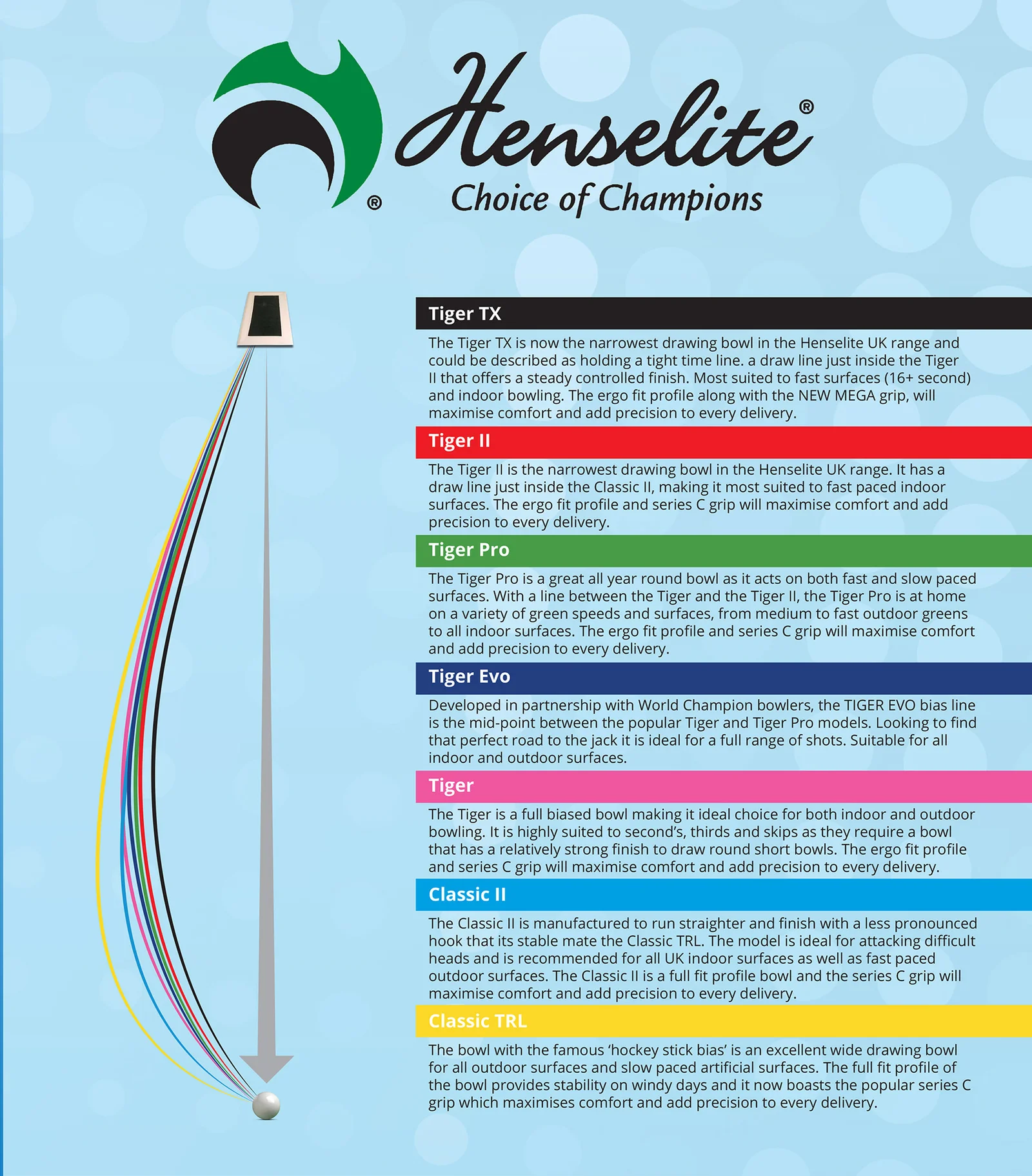
| Tiger TX | Narrower Tiger-family option | Tighter line preference |
| Tiger II | Gentle draw with holding finish | Provides draw options |
| Tiger Pro | Medium drawing characteristics | Varied indoor/outdoor conditions |
| Tiger Evo | Between fuller and mid-range Tiger options | Players seeking additional draw |
| Tiger | Fuller bias | Slower outdoor greens |
| Classic II / Classic TRL | Different traditional finishing characteristics | Players favouring a traditional line |
Henselite's broader international offering demonstrates why the label “medium bias” needs context. The right comparison is between models on the surfaces you actually encounter.
Aero: international options
| Model | General characteristics | Worth investigating for |
|---|---|---|
| Groove | Fuller draw for slower conditions | Natural grass greens |
| Sonic | Alternative fuller-drawing option | International outdoor greens |
| Optima | Versatile draw | Appropriate mixed surfaces |
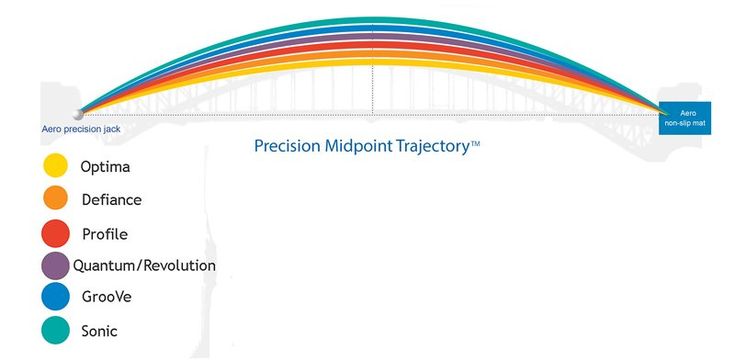
Aero identifies models such as Groove and Sonic for slower-grass international markets. That may make them more relevant to some UK, South African and Canadian conditions than the very tight options favoured on certain fast greens.
Drakes Pride: UK and international models
Professional, Pro-50, XP and d-tec are names international readers may encounter in the Drakes Pride range. Since availability and published specifications vary by market and over time, compare the current local catalogue and manufacturer bias guidance rather than assume those models have exactly the same intended application as the Australian Conquest, Adrenaline or LS-125.
4. WHY MANUFACTURER BIAS CHARTS AREN'T A DIRECT CROSS-BRAND TEST
Bias charts are helpful when comparing models within a manufacturer's range. They are not necessarily standardised between manufacturers.
Companies may show different test conditions, scales, reference points or illustrative trajectories. The same bowl will also respond differently to green speed, delivery weight and surface condition.
That means you shouldn't overlay two manufacturers' diagrams and claim one model draws a specific amount more than the other. Without controlled independent testing, the honest comparison is the manufacturer's published characteristics alongside hands-on trials.
When testing, look at the overall arc, how the bowl finishes and how it responds when you add reaching weight. These details influence your tactical choices during a game.
5. THE TBA PRACTICAL MODEL-SELECTION GUIDE
Start with your regular conditions rather than your preferred brand. Use the shortlist below to decide which models you might try, not as a prediction of which one will perform best in your hands.
| Your regular conditions | Models worth investigating | What to test |
|---|---|---|
| Slow/heavy outdoor grass | Aero Defiance, Groove or Sonic; Henselite Tiger or Tiger II; Drakes Pride LS-125; Taylor Lignoid | Enough bias around short bowls |
| Medium outdoor greens | Aero Optima; Henselite Dreamline XG; Drakes Pride Conquest; Taylor Ace; Henselite Tiger Pro | Versatility over different lengths |
| Fast outdoor greens | Aero Evolve or Dynamic; Henselite Cruze; Drakes Pride Adrenaline; Taylor Vector VS | Predictable line while still able to get to covered jacks |
| Indoor bowls | Taylor Vector VS, Blaze or Ace; suitable Aero or Henselite options | Performance on your actual carpet and typical green speed |
| Multiple clubs and variable speeds | Henselite Dreamline XG; Aero Optima; Drakes Pride Conquest; Taylor Ace; Henselite Tiger Pro | Adaptability at both the slowest and fastest venues you regularly play |
Important: Availability differs between countries, and manufacturer descriptions are guidance rather than independent laboratory rankings. Always verify the current local model range.
Three questions to narrow your shortlist
- Where do you bowl most often? Consider the actual speeds and surfaces, including away venues, not the quickest green you've ever visited.
- Which shots matter most? Can you draw around short bowls, play controlled reaching weight and get to a covered jack?
- What can you repeat? A comfortable model that you can deliver consistently is more valuable than one that looks or is marketed the best.
6. TEST YOUR SHORTLIST PROPERLY
A handful of draw shots isn't enough to evaluate a set of bowls. Test each shortlisted model against the same practical challenges, ideally on the green where you normally play.
Test 1: Open draw consistency
Deliver several bowls on both hands and over different lengths. Record the spread of finishes rather than judging the single best bowl.
Test 2: Drawing around a short bowl
Place a bowl two to three metres short of the jack, on or around the ideal line. Try drawing around it. Does the model provide enough bias or finish?
Test 3: Controlled reaching weight
Play bowls intended to finish approximately one/two/three metres beyond the jack. Observe the change in line as delivery weight increases.
Test 4: Different lengths and mat positions
Try short, medium and full-length ends. A model should not be judged from one preferred mat/jack position.
Test 5: A simulated match head
Set several bowls around the jack and give yourself specific tasks: draw second, rest an opposition bowl or reach a partly covered jack. Record successful attempts.
7. DON'T EXPECT A NEW MODEL TO FIX YOUR DELIVERY
Changing bowls can make sense if your present model genuinely doesn't suit your conditions. But equipment will not automatically correct inconsistent alignment, release or general inconsistent delivery.
A narrower bowl can make the amount of green you take look smaller, without fixing an inconsistent delivery. A wider bowl can provide more draw options but won't improve an unreliable line by itself.
Before changing, ask whether you're missing on line, weight or both; whether the issue appears on each hand; and whether it occurs only under particular conditions. If you cannot identify the limitation, it may be time to examine your delivery rather than your equipment.
8. DOES A COMPETITIVE BOWLER NEED TWO SETS?
For many club bowlers, one suitable set is entirely sufficient. But if you regularly play on very different surfaces, such as heavy outdoor grass and quick indoor carpet, a second set may be worth exploring.
If you do, consider keeping size, weight and grip broadly familiar where possible. The aim is to change only the characteristics you need, not introduce unnecessary variables.
Owning two sets also means learning to use both. Changing every time you have a poor game can create more confusion than improvement.
9. YOUR FINAL CHECKLIST
- Identify the greens and surfaces you play on most.
- Shortlist models whose published guidance matches those conditions.
- Check regional availability and current manufacturer specifications.
- Evaluate grip, size and comfort in your hand.
- Test open draws, covered jacks and weighted shots.
- Compare repeatable results, not occasional exceptional bowls.
- Separate equipment limitations from technique problems.
- Choose confidently, then spend time learning the bowl.
For more guidance on size, grip and the broader equipment decision, read Which Bowls Are Best? How to Choose the Right Bowls for Your Game.
FINAL END – WHICH BOWLS ARE BEST IN 2026?
There are excellent bowls available from Aero, Henselite, Taylor and Drakes Pride. The challenge isn't finding a quality product, it's finding the model that allows you to play the shots your game requires, consistently, on the greens where you compete.
A bowl that suits an elite player on a very fast green may be a poor choice for someone bowling on heavier grass. Likewise, a fuller-drawing model can be useful on slower surfaces without necessarily being the right option for every player there.
The best bowl is the one whose characteristics complement your conditions and tactical needs. Shortlist sensibly, test thoroughly and remember that good technique and purposeful practice matter more than the badge on your bowls.
Editorial note: This independent coaching guide interprets published manufacturer information and does not claim controlled cross-brand testing or firsthand use of specific models. Regional model ranges and guidance can change.
Turn this advice into progress.
Choose your next step: purposeful practice drills, personalised delivery feedback, ongoing 1:1 coaching or an on-green development session.
Enjoyed this article?
Receive practical coaching tips and fresh practice ideas from TBA.
Unsubscribe at any time. Your details will never be sold.